Wednesday, December 9, 2009

Out of oblivion: the faces of Ilse and Hertha

This weekend, I visited London. In London, I visited Rita. Years ago I interviewed her father about growing up with Charlie, and now I wanted to find out whether she had any materials or information of genealogical interest: Charlie's mother and her grandmother were sisters.

From the very beginning of our renewed conversations, Rita insisted she really has nothing to contribute. Nevertheless, she met with me. While going thru old photo albums, showing me there really were only pictures of her immediate family, she decided to peel off some of them, and have a look at their backs. Two photographs she always took for featuring her mother came out to be clearly labeled as showing Hertha and Ilse, the mother and the child. They were taken in 1937 in Krakow.

I had a beautiful Czech sentence prepared for the book, which read "We will never know what Hertha and Ilse looked like. The faces of mother and sister of Charles Jordan may have been captured in one of the Warsaw ghetto photographs, but even if they were, they are known to us only as 'Jews' or 'victims' today, nameless pieces of the massive crowd of murdered millions." Thanks to Rita, this sentence became obsolete.


The Mother and the Child


Ilse Jordan - Flato

Sunday, November 29, 2009

More about the Egyptian embassy

After some reactions to the previous post I realized that the Frolik account of Charlie's murder at the Egyptian embassy caused, among other things, also major confusion regarding the understanding of distance between the Esplanade Hotel, where Charlie stayed, and the then Egyptian embassy.

All that shall be said is that after changing his room to get one with a street view, Charlie was looking at the Egyptian embassy from his hotel window - across the railway tracks, yes, but still he saw its windows. And the people at the embassy saw his window.

The following photos are recent, both the trees and the railway station grew since 1967 - but I bet you get the idea.


This is the Esplanade hotel seen from the then Egyptian embassy


And this is the then Embassy as seen from the street in front of Esplanade hotel


Nice garden, and there is a detached garage as well... some local sources say the garage is where Charlie died.

Sunday, November 22, 2009

The Egyptians

According to the published account of a certain Josef Frolík, escapee from the Czechoslovak Secret Service, Charles Jordan was murdered at the Egyptian Embassy in Prague. I have researched this claim at length, and got convinced that the so-called Frolík book is nothing but a CIA plant serving a whole plethora of purposes but telling us the truth about what happened to Charlie.

Nevertheless, I tried to get as much information about the Egyptian embassy in Prague as possible. I tried to contact all the former Czechoslovak spies at the Egyptian embassy. The most interesting potential sources have unfortunately passed away before my inquiries, but... a year or two after my initial contact one of their widows called me and offered me her husband's "photo collection". In exchange for money, of course.

I am now a proud owner of almost two thousand color photographs and slides from the Egyptian embassy in Prague, taken between 1957 and 1967. Unfortunately, I have no idea who is who. I can identify the photographer and his wife, one of the ambassadors, Magdi Hassanein, and some of the Russian colonels. Maybe somewhere in the crowd are also people connected to the Esplanade hotel, place where Charlie stayed at the time of his death: namely Ihsan Mohammed Talaat, head of the United Arab Airlines office and second secretary of the Embassy, and his lover Jiřina Švandová - Hellimanová. Those two may have played some role in the real story of Charlie's death. But I would not know who they are, because I have never seen their faces.

Nevertheless the pictures are so beautiful - and look so much like from a 1960ies spy thriller - that I decided to share a select few with you. Maybe one day I will use them for something.


Friday, November 13, 2009

A big thank you to my research assistants

I just wanted to say it aloud: without the help of friends in the academia, people willing to dedicate their free time to looking up obscure publications for me, I would not have gotten anywhere.

Thank you very much - I will keep bugging you for more.

Sunday, November 8, 2009

Arkadi Flato, the brother-in-law

All I know about Arkadi is that he married Charlie's sister Ilse, probably in Berlin.

How they met, where they lived, how they lived... and how they died, all of that is unknown. Their names do not appear in the Yad Vashem pages of testimony, a fact I find very strange. Charlie must have been searching for them after the war, and I do not believe he did not submit the names of his family to YVS already during the 1950s.

But still - Arkadi is the only one from the whole Jordan family in Poland whose fate is at least a little bit traceable. There is no data on Ilse, nor Hertha, the mother.

I know by now that Arkadi played with his own orchestra in big hotels throughout Poland and Germany, including the famous "Patria", a hotel owned by Jan Kiepura. I also know that after leaving Berlin in 1933 he was an arranger for the Warsaw radio, and also for Odeon Records in Warsaw. It seems the family lived in Lodz for a while. There are small pieces of information about Flato performing in the Warsaw ghetto, usually with Arthur Gold, the later kapellmeister of Treblinka. After the first big wave of deportations, there are several testimonies about Flato, a master violinist, surviving in a small labor camp - but that Flato seems to have been a young fellow. I have no idea how old Arkadi was, but surely he was not that young. Or was he?

It is not known to me whether Charlie tried to get his family out of Poland at all, and if so, then when - or how. All we seem to know is that they perished. And that the whirlwind of WWII obliterated almost all material records of their existence.

Almost all - but not all. Some of the recordings made by Arkadi Flato are still popular in Poland today - you can listen to them here:

http://www.youtube.com/watch?v=OuhDqmbKkTk


http://www.youtube.com/watch?v=rJQUsC34ICM

http://www.youtube.com/watch?v=HkPV2wJwgYg


And here is a Warsaw Ghetto poster advertising an afternoon concert of Arkadi Flato - playing with the hero of the film "The Pianist", W. Szpilman:


If only I knew where one may find the unused affidavits for the Polish, Russian or German Immigration quota. (In case Charlie ever filed an affidavit for his family, of course). If only I knew at least a place and date of birth of someone.
Tuesday, November 3, 2009

Why are you doing this?

Many people are asking me why am I doing this. Often they do not specify what exactly they mean by "this", and they assume I know. But I do not know. By asking about "doing this" they probably mean to ask why am I interested in a story that has nothing to do with me. Why I made the film and why am I trying to write a book now.

I could answer very simply. Since the Czech police almost charged me with Charlie's murder - precisely, with not reporting a criminal act of murder, and with covering up for the murderer - my interest in the Jordan case became personal. Even though the crime I was to be charged with occurred five years before I was born, even though the charge was issued because I demanded the investigation of new leads I uncovered, I still felt offended and took it very personally. But it is not only Charlie's weird death that I am looking into, so this simple explanation could not be used.

I simply feel that by properly capturing the life story of Charles Harold Jordan, one can also capture the major turning points of twentieth century, with all the crushed hopes and political evil. His story seems to be of great educational value to me, the story of a scrap metal dealer eventually becoming the Father of the Refugees. It is the details of his transformation that I am missing the most, the correspondence with Europe and anguish of his own refugee years, the attempts to get his own family out of Europe, and his reactions to the very personal failure to do so.

This is why I am in desperate need of family data and stories. I hope one day the distant relatives in London will start talking to me again, so that I would be able to reconstruct the Hirschberg family tree. There may be a small family archive still left in America as well. There may be relatives of the Gecman/Jaworski family still living in Germany or Brasil, who may have something. There may be some Flato relatives in Russia or Israel. There may be personal papers of people who knew Charlie back in Germany that do mention him. There may be a million little stories that I do not want to miss, because without them the mosaic of a life would be imperfect.

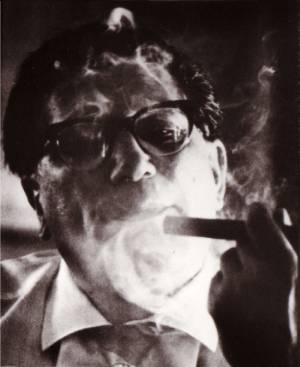
I know that the five loyal readers of this blog deserve a piece of enigma at the end of this rather rambling post. Today's piece will feature the only other image of Charlie without glasses that I came across - or maybe not. Maybe it is not him. You can click on the image to enlarge it.

Can you recognize him at all, or is it somebody else? Do you know who the other people are? I assume they are the Nemela family, but is that true?

Sunday, November 1, 2009

I am not the only one!

It feels good not to be the only one writing about Charles Jordan.

I stumbled upon the following article by Rabbi Mayer Abramowitz, describing the early days of Charles Jordan in Europe, even featuring a nice photo of him - with glasses so much different from all the later models!

http://www.ujc.org/page.aspx?id=45479

Saturday, October 31, 2009

Berlin, 1909 - 1933


One of the big mysteries of Charlie's life starts already at its very beginning. I know that after divorcing his father, the mother returned back to Germany. She spent barely a year in America. But where did she return to? Where exactly did Charlie grow up, from 1909 on?

Above is the only picture of Charlie I have from that time. It also happens to be one of the two pictures I have where he does not wear glasses. It will never be known who is the woman guarding Charlie and Freddie during their outing at the "See", because her head was torn off. On purpose?

I heard painful stories about how Charlie was made into a Jew, and how he had to have bar mitzvah - all of this because his new stepfather, Jan Gecman, was religious. Or rather he was an occasional chazzan at the local synagogue, and did not want anything to tarnish his image in the eyes of the community. But which community, which synagogue?

I had several exchanges with the "meldungsregister" in Berlin, and there seems to be no record of the whole family ever living in Berlin. It must have been in Wilmersdorf and Charlottenburg... but where exactly was Jan Gecman the occasional chazzan, employed for High Holidays only? Fasanenstrasse? The old Charlottenburg synagogue? The Eben-Ezer Chapel, temporary synagogue of the community that built the Pestalozzistrasse synagogue? Or did it all happen in some public spaces being rented out by another community since 1913, always with the hope that the construction of their own, Prinzregentenstrasse synagogue, will start soon?

Interestingly, there is more information about Jan Gecman's life after his divorce with Charlie's mother. He moved from Uhlandstrasse 52 back to Wilmersdorf, and got out of Germany in 1937. During WWII he was occasionally hired by the German Jewish Community of Rio de Janeiro as a chazzan. He also gave concerts, boasting of being a "Famous Russian Baryton". After the war his nephew, Polish Communist journalist Karol Jaworski, got into trouble for having a Jewish relative abroad.


Fasanenstrasse synagogue - in 1957, and then - 1958

The Beginning


I think Paul is right, I should start a blog. People from Charlie's past I would have never reached may react to the postings here. Who knows.

As you can see, the idea was so appealing to me that I actually desecrated shabbat in order to start giving it a try. But this is just the beginning. No real content yet.

This blog will be dedicated to discovering pieces of information about the real life of Charles Harold Jordan, a man who once was the Executive vice-president of the American Jewish Joint Distribution Committee, a man whose body was found floating in the Vltava river of Prague in the summer of 1967.